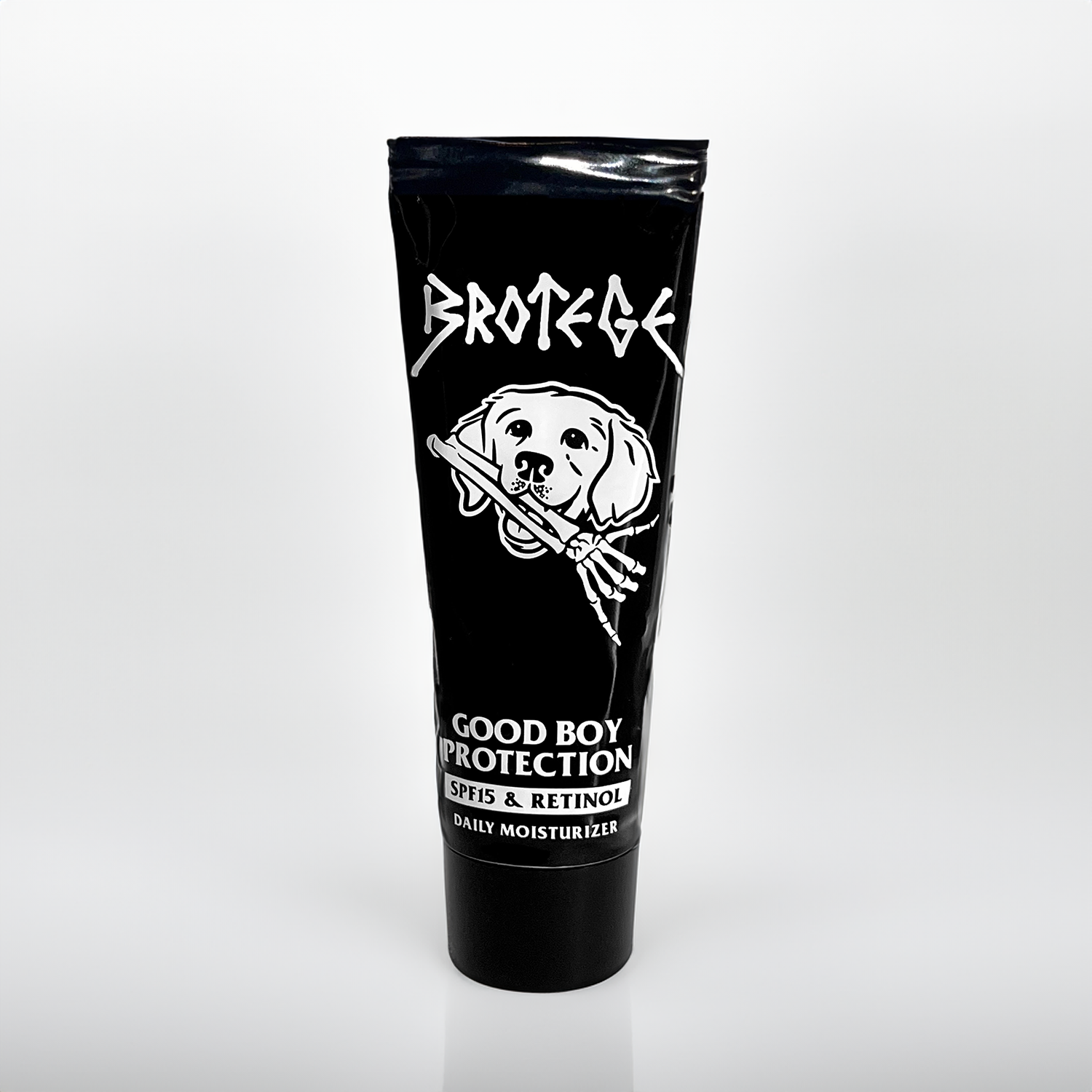
This is about to get painfully boring, but you asked why retinol is inactive, so now we all have to suffer through an FDA vocabulary lesson.
Why is retinol listed as an inactive ingredient?
Because “active” and “inactive” mean something very specific on an FDA-regulated OTC Drug Facts label. “Inactive” does not mean an ingredient has no benefit. It means that, in the strict FDA drug-labeling sense, the ingredient is not the one treating, curing, preventing, or mitigating a disease or medical condition in that product.
BROTEGE’s all-in-one formula includes sunscreen. In the U.S., sunscreen is regulated by the FDA as an OTC drug and must follow strict FDA sunscreen labeling rules. That means including a Drug Facts panel, which lists the FDA-regulated “active ingredients” (in our case, the sunscreen filters that provide UV protection).
Everything else in the formula, including moisturizers, skin-conditioning ingredients, and retinol, must appear in the “inactive ingredients” section.
However, that does not mean retinol is useless or just filler. On the contrary, retinol is one of the most researched cosmetic skincare ingredients shown to help improve the appearance of texture, tone, and visible signs of aging. But because those appearance-based anti-aging benefits are not considered to be medical conditions by the FDA, retinol is never listed as an “active ingredient” on a Drug Facts panel.
“But I thought retinol was an acne drug?”
This confusion usually comes from the similarity between retinol and retinoids.
Retinoids are the broader family of vitamin A-related ingredients. Retinol is the common form used in everyday cosmetic skincare products for appearance-based benefits, like smoother-looking skin and visible anti-aging support. In cosmetic anti-aging products, retinol is not an FDA OTC drug active ingredient.
Other retinoids are different drug ingredients. For example, adapalene is a retinoid that can be sold as an OTC acne treatment, and prescription retinoids like tretinoin or tazarotene are regulated as drugs when used for acne or other medical indications. Those products have their own Drug Facts panels, directions, warnings, and acne-treatment claims.
BROTEGE uses retinol as part of a daily moisturizer + sunscreen + anti-aging formula. And although some users have noticed clearer-looking skin as part of their overall results, BROTEGE is not an acne medication.
We keep the retinol at a level designed for regular use, because the whole point is getting dudes to do something good for their face on the daily. Prescription-strength retinoids are often used for more aggressive skin turnover, which can come with irritation, dryness, and peeling. That may make sense if a dermatologist tells you to do it, but most guys are not looking for a face routine that requires a calendar, a recovery period, and three days of looking like a molting zombie.
Our philosophy is simple: consistency beats chaos. Slow and steady wins the race, my sickest tortoise.